Evolutionary Medicine.
Your biology was shaped by an environment that differs from the one you live in. Much of chronic disease can be read, in part, as that mismatch. This is the lens I read every other pillar through.
Human physiology was shaped by an environment that differs from the one we live in, and much of what goes wrong in modern health can be read, in part, as a mismatch between the two. Evolutionary medicine is the clinical logic for what the framework works toward and how the other systems are interpreted.
The system
What it is, and why it matters.
- What it is
- Evolutionary medicine is the framework that asks why a system is the way it is, not just how to fix the symptom in front of you. It draws on comparative physiology, paleo-anthropology, and ancestral pattern reasoning to identify which inputs your biology evolved with and which it did not. It is not a diet, not a lifestyle brand, and not a return to the past. It is a clinical interpretive lens that informs every other pillar in this practice.
- Why it matters
- Modern medicine treats symptoms as if they appeared out of nowhere. Evolutionary medicine names the actual cause for most chronic conditions: a mismatch between the biology you inherited and the environment you live in. Light, food, movement, sleep, stress, and social structure have all changed faster than your physiology can adapt. The cost shows up as the diseases we now treat. Reframing biology this way changes what counts as a clinical lever.
- What I read for
- Mismatches. Where modern life is asking your biology to operate outside the inputs it evolved with. Inadequate morning light. Eating windows that never close. Constant low-grade stress without recovery. Movement that is too sparse or too narrow. Social structure that does not match a 200,000-year-old social animal. The intervention is rarely a drug. It is restoring the input.
What it can look like
When this system is under strain.
None of these is specific to this system, and none of them diagnoses anything. They are the presentations in which I find this system worth reading.
- A long list of small problems that no single specialist can explain.
- Symptoms that improve dramatically on vacation and return at home.
- Energy, sleep, and mood that track with seasons, light, or routine more than anything you eat or supplement.
- A sense that something fundamental is off but every standard panel says you are fine.
- Chronic conditions in a body that is otherwise young.
Evidence boundaries
What can and cannot be measured.
Stated plainly, so this page never reads as a promise. The standard for how evidence is weighed is on the framework.
Can show
- A way of asking why a system behaves as it does, which helps decide which lever to try first.
- Population evidence on inactivity, diet pattern, light, sleep and social connection, which is where the lens draws its weight.
Cannot show
- Anything measured directly. It is a lens, not a test.
- That any one ancestral pattern is right for a given person. The mismatch idea explains; it does not prescribe.
Everyday levers
What tends to help, in general.
General levers, not a protocol. Which of them applies to a given person, in what order and at what dose, is decided in care, against that person’s history and results.
Match light to time of day
Bright outdoor light in the morning. Dim warm light in the evening. The single highest-leverage ancestral input you can restore.
Eat real food, mostly plants, and stop sometimes
Whole foods, varied, with a daily eating window of 10 to 12 hours. The pattern matters as much as the contents.
Move daily, the way bodies were meant to
Long, slow walking. Heavy infrequent lifting. Sprinting when it is called for. Not three hours on a treadmill.
Sleep on a rhythm, not a schedule
Consistent timing, dark room, cool temperature, no screens in the last 60 minutes. Honor the cycle.
Invest in your social biology
Loneliness moves inflammatory markers as hard as smoking. Humans were not built to be solitary, and your physiology knows.
Cycle stress, do not eliminate it
Hard work, hard play, real rest. Continuous low-grade stress is the modern signature your body cannot resolve.
Read next
Go one level deeper.
- Essays
- The evolutionary basis for different chronotypes.
- Social isolation versus tribal living. The evolutionary impact on health.
- The thrifty gene hypothesis and obesity.
- Movement patterns of early humans. Lessons for training today.
- The paleo lifestyle. Should you live like your ancestors.
- Why modern diets clash with ancient biology.
- The Report
Recent issues that covered this pillar:
- Wednesday, October 14, 2026: Gut microbes that traveled with humans out of Africa survive in hunter-gatherers on two continents, and most are vanishing from industrialized guts.
- Monday, October 5, 2026: No notable signal this cycle.
- Friday, September 25, 2026: No notable signal this cycle.
- Connected systems
- No system stands alone. Chronobiology · Metabolism & Metabolomics · Epigenetics
- The framework
- How this pillar sits with the other six, the method, and the order of intervention: how I think.
Questions
About evolutionary medicine
- Is this paleo, ancestral health, or biohacking?
- None of those, though they share roots. Paleo is a diet. Ancestral health is a movement. Biohacking is a hobby. Evolutionary medicine is a clinical framework that informs how I interpret your data and what I prescribe.
- How do you measure this directly?
- You do not measure evolutionary medicine. You apply it. It is the interpretive lens that decides what a biomarker actually means, what to do about it, and which lever to pull first.
- Does this mean I have to live like a hunter-gatherer?
- No. You live in 2026, and so do I. The work is identifying which modern inputs are working against you and which ancestral patterns are worth restoring. Most of the highest-leverage moves are small and free.
This system, in your case
Reading it in general is not reading it in you.
Apply, and I follow up with you personally after I have read it. You tell me what is going on. I tell you how I would approach it. You decide if I am the right physician for you. Nothing is charged when you apply.
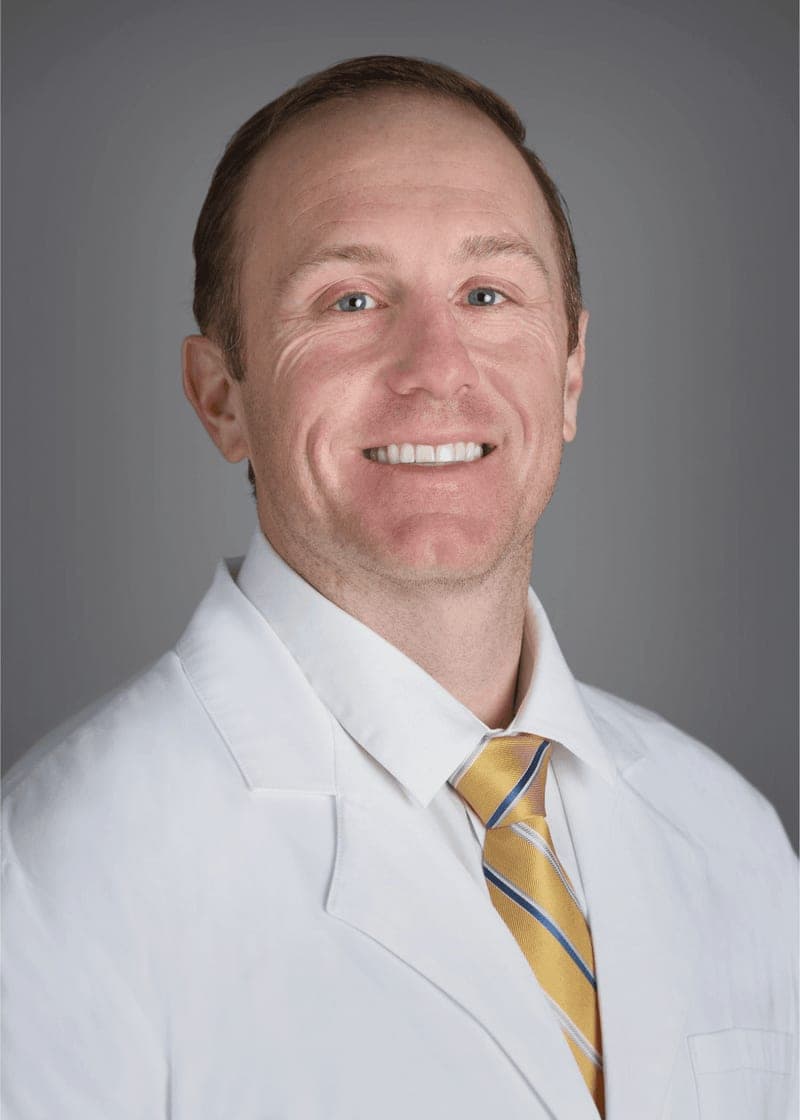
Written by
Daniel Tagge, MD
Board-certified family physician and founder of Tagge Health. Certified in Health Optimization Medicine.
About Dr. Tagge