For data you already own
You already have the results. Someone still has to read them.
Bring the panel you bought, the AI summary you ran, the labs your doctor ordered, and the wearable data sitting on your phone. I read all of it as one picture, against optimal ranges rather than disease cutoffs, and tell you what actually matters.
Thirty minutes, with me, at no cost.
The short answer
The data was never the hard part.
A few years ago the problem was access. Getting a hundred biomarkers drawn meant a physician who would order them and an insurer who would pay. That problem is largely solved. You can buy the panel yourself, and a language model will explain every value on it in about four seconds.
What did not get solved is the part that was always hard. Which four numbers out of the hundred explain how you actually feel. What was not measured that should have been. What to do first, what to do second, and what to ignore. And then, six months later, whether any of it moved.
That is a physician problem, and more data does not make it easier. It is the reason so many people finish an expensive panel with a dashboard full of colors and no idea what changes on Monday.
Being fair about it
What an algorithm and an AI actually get right.
I am not going to tell you these tools are useless. They are not, and any physician who says so is protecting something. Here is the honest split between what they do well and what they cannot do at all.
| DTC panel dashboard | AI summary (ChatGPT, Claude) | Physician review | |
|---|---|---|---|
| Flag out-of-range values | Yes, reliably | Yes, reliably | Yes |
| Explain what a marker means | Usually, briefly | Yes, and often very well | Yes |
| Read markers against each other as a system | Rarely. Values are shown one at a time. | Sometimes, and it is genuinely good at this when given everything | Yes. This is the actual work. |
| Compare to optimal rather than to the lab's range | No. The reference range is the whole logic. | Only if you ask it to, and the sourcing varies | Yes. Optimal ranges from healthy 21 to 30-year-olds. |
| Know what was never measured | No | No. It cannot see what it was not shown. | Yes, and this is usually where the answer is |
| Order the missing test | Only what is on its menu | No | Yes, at my actual cost |
| Examine you | No | No | Yes, at your house in the Charlotte metro |
| Prescribe and treat | Varies by company | No | Yes |
| Be accountable when it is wrong | No | No | Yes. That is what a license means. |
Panel contents and clinician involvement vary between companies and change often. Check what yours actually includes rather than taking this table's word for it.
What to bring
Everything you already have. Yes, including the AI output.
A direct-to-consumer panel
Function Health, Superpower, InsideTracker, Marek, or one of the many others. Usually a large marker count with an app-based read and a color-coded dashboard. Bring the full export, not the summary screen.
An AI summary you ran yourself
You pasted the PDF into ChatGPT or Claude and got back something that sounded thorough. Bring that too. I want to see what it flagged, because what it flags is often reasonable and what it misses is usually the same four things.
Labs your own doctor ordered
The draw that came back normal while you felt anything but. Often the most useful set on the list, because it was ordered for a reason and it has history behind it.
Wearable and continuous data
Whoop, Oura, Apple Watch, a CGM you wore for two weeks. Export it. Sleep architecture and glucose variability answer questions a single blood draw cannot.
A genetics report
23andMe, Ancestry, or a clinical panel. Genetics is context rather than destiny, and it is most useful read against what your biology is actually doing right now.
Most people are missing two or three specific things rather than everything: fasting insulin, ApoB, Lp(a), a comprehensive thyroid with reverse T3, SHBG alongside the sex hormones. Filling the gaps is usually cheaper and faster than starting over, and I will not re-order something recent and good.
If you want to see how I read a single result before you talk to anyone, I have written up the ones that come up most often, one number at a time.
Straight about the offer
I do not sell a one-off lab reading.
I could. It would be an easy product to sell and I would probably sell a lot of them. I do not, because a single interpretation delivered once is the same mistake the dashboard made: a photograph of a moving thing, handed over with nobody accountable for what happens next.
So the first conversation is free, and it is a real one. Bring everything, and I will tell you what I see, what I would order, and what I would do first. If that is all you wanted, take it and go. It costs you nothing and I will not chase you.
If the work turns out to be worth doing properly, it happens inside one membership, month to month, where labs and medications are billed at my actual cost with the invoice visible and I make $0 markup on anything I order.
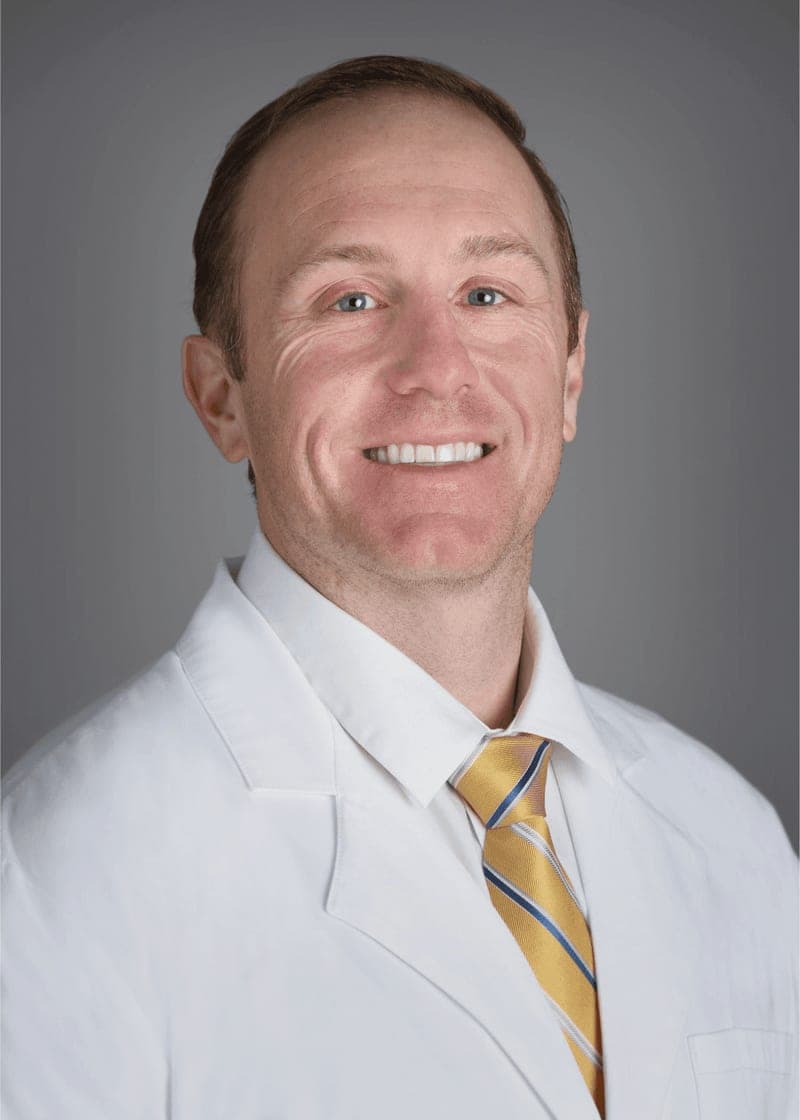
Written by
Daniel Tagge, MD
Board-certified family physician. North Carolina’s only physician certified in Health Optimization Medicine. Third-generation physician. NPI 1225562218.
About Dr. TaggeRead deeper
What I am reading your results against.
The framework and the systems behind every Precision Health Plan, written for the people I treat.
Questions
Common questions about results you already have.
Start here
Bring me what you already paid for.
A complimentary 30-minute call by phone or video with me. You tell me what is going on. I tell you how I would approach it. You decide if I am the right physician for you.
Charlotte metro house calls; virtual across NC & MI.